The Journey of Mohammad Rifqi Ghiffary, Ph.D., from ITB’s Bioengineering Program to Becoming a Global Synthetic Biology Scientist
By Azka Zahara Firdausa - Mahasiswa Rekayasa Hayati, 2022
Editor M. Naufal Hafizh, S.S.
.jpg)
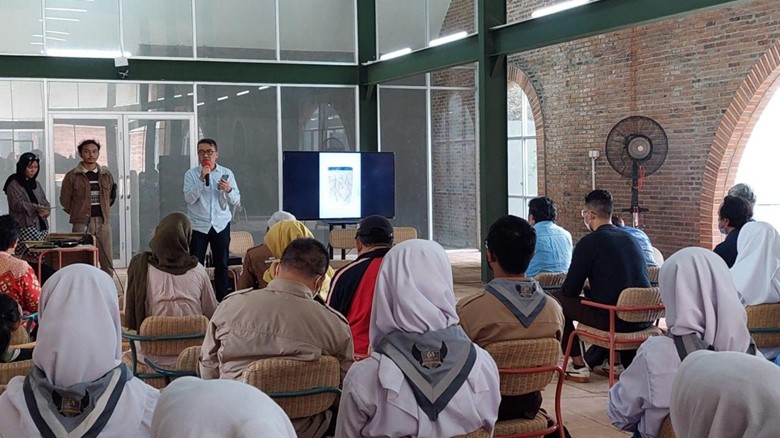
JATINANGOR, itb.ac.id — Mohammad Rifqi Ghiffary, Ph.D., an alumnus of ITB’s Bioengineering Program, shared his knowledge and experience as a synthetic biology researcher at the A*STAR Research Institute during the Topics in Bioindustry course on Wednesday (September 10, 2025). The session took place in Room 9658, Labtek 1A, ITB Jatinangor Campus, attended by Bioengineering and Agricultural Engineering students interested in the bioindustry field.
At the beginning of the lecture, Dr. Ghiffary explained the fundamentals and applications of synthetic biology, as well as its connection to metabolic engineering. He described synthetic biology as an interdisciplinary field that combines biology, engineering, and computer science principles to design new biological systems or redesign existing ones to be more specific and beneficial. The overarching goal of synthetic biology is to engineer living organisms to perform new functions that address global challenges such as climate change, sustainability, and public health issues.
One of his notable studies involves developing bio-based indigo dye as an alternative to synthetic chemical dyes. In earlier research, indigo compounds were extracted from Indigofera plants using tryptophan-related proteins; however, yields were low and production costs high. As an alternative, Dr. Ghiffary successfully enhanced the biosynthesis of a similar compound, indigodine, achieving up to 50 g/L by utilizing the bacterium Streptomyces lavendulae, which contains the bpsA gene encoding the indigodine-producing enzyme. The gene was then transferred to Corynebacterium glutamicum, a strain that is easier to cultivate on a large scale.
The publication of this research opened significant opportunities for applying synthetic biology in industrial processes. The bio-based dye technology not only offers improved production performance but has also attracted the attention of textile and fashion companies seeking to transition toward sustainable materials. This work exemplifies how synthetic biology can deliver innovative solutions to industrial challenges while promoting environmentally friendly practices.
.jpg)
Dr. Ghiffary’s journey to his current position was far from easy. He once made a “career turn� from the engineering-oriented Bioengineering toward a more scientific path by pursuing a master’s degree in molecular biology. His interest began with his undergraduate thesis, which revealed the vast potential of molecular biology for research and industrial applications. After graduating from ITB, he deepened his understanding by reading extensively about molecular biology before continuing his studies at Wageningen University.
Although now deeply involved in synthetic biology, Dr. Ghiffary emphasized that he never regretted studying in the Bioengineering program. According to him, this program equipped students with multidisciplinary knowledge and valuable technical skills.
“If I had to choose again, I wouldn’t pick microbiology or molecular biology. I would still choose Bioengineering,� he said.
Beyond technical expertise, he said that a researcher must possess a scientific mindset—logical, critical, and systematic—driven by curiosity to observe and understand phenomena. Such a mindset enables researchers to produce real-world solutions to global problems. With the right combination of synthetic biology, metabolic engineering, a scientific way of thinking, and effective networking strategies, researchers have a strong opportunity to build a career in this field at the international level.
.png)
.jpg)
.jpg)
.jpg)
.jpg)